


A fixed-rate mortgage locks a borrower into a constant interest rate and principal-plus-interest payment for the life of the loan, delivering predictable housing costs that simplify budgeting and long-term planning in Sacramento. This guide explains how fixed-rate mortgages work, compares 15- and 30-year terms, walks through 2026 rate trends for Sacramento, and outlines qualification requirements and lender-selection tactics. Many Sacramento buyers face price volatility and shifting inventory; choosing a fixed-rate loan can protect monthly cash flow against rising rates while offering clear payoff timelines. Readers will learn the mechanics of amortization, current local rate ranges, how to compare fixed-rate loans with ARMs, and practical next steps—such as using mortgage calculators and preparing application documents—to make confident financing decisions. The article maps to six practical sections covering definitions and mechanics, current rates and market drivers, term comparisons, fixed vs adjustable choices, qualification checklists, and calculator + lender guidance, all tailored to Sacramento homebuyers and the local housing context. Throughout, related concepts like APR, rate lock, down payment, and refinancing are defined to help you act with clarity.
What Is a Fixed-Rate Mortgage and How Does It Work in Sacramento?
A fixed-rate mortgage is a home loan where the interest rate and monthly principal-and-interest payment remain constant for the agreed term, which creates predictable housing costs for Sacramento buyers. The mechanism relies on an amortization schedule where each payment applies a fixed portion to interest and principal; early payments are interest-heavy and later payments build equity more quickly. Predictability reduces refinancing pressure when rates rise, which is valuable in Sacramento’s market where local price movement and inventory shifts influence buyer decisions. Understanding amortization and rate locks helps buyers choose the right term length and plan monthly budgets effectively, and the next subsection explains how interest stability translates into payment stability.
How Does a Fixed Interest Rate Provide Payment Stability?
Fixed interest rates provide payment stability because the lender calculates an amortization schedule at closing and that schedule determines the principal and interest portions across every monthly payment. This mechanism means that, regardless of national rate movement or local market swings, a homeowner’s principal-and-interest payment remains the same unless they refinance or make additional principal payments. A rate lock at application or preapproval secures the quoted rate for a defined period, protecting borrowers while they complete underwriting and closing tasks. For a Sacramento buyer who values long-term budgeting—such as a household purchasing in Elk Grove—this predictability eases planning for property taxes and insurance and reduces the chance of payment shock, which leads to understanding typical loan terms next.
What Are the Typical Loan Terms for Fixed-Rate Mortgages in Sacramento?
Typical fixed-rate mortgage terms available to Sacramento borrowers include 30-year and 15-year conventional fixed loans, with other variations such as FHA fixed-rate, VA fixed-rate, and jumbo fixed-rate products for high-value purchases. A 30-year fixed spreads repayment over a longer period for lower monthly obligations, while a 15-year fixed shortens payoff time and lowers total interest but increases monthly payment amounts. Government-backed fixed products adjust qualification details—FHA often accepts lower down payments and credit scores, whereas VA programs provide favorable terms to eligible veterans; jumbo fixed-rate loans apply to larger loan amounts. These standard terms help buyers select a product aligned to cashflow, tax planning, and long-term goals, and understanding current rates clarifies how these terms convert into actual monthly payments.
What Are the Current Sacramento Fixed Rate Mortgage Rates and Market Trends?
Current Sacramento fixed mortgage rates in early 2026 have settled into ranges influenced by national monetary policy, local housing demand, and inflation expectations, producing different pricing for 30-year and 15-year fixed terms. Lenders set consumer rates based on Treasury yields, lender cost-of-funds, credit risk, and local market factors such as median home price trends and inventory. Sacramento buyers should read rates as ranges rather than single points; market momentum heading into 2026 shifted rates up and down with Fed guidance and regional housing activity. The following table summarizes representative local rate ranges and recent movement to make local comparison easier and to help readers request tailored quotes.
Introductory table summarizing local rates and short-term movement:
Loan Type | Typical Rate Range (Early 2026) | Market Signal |
|---|---|---|
30-Year Fixed | 6.00% – 6.10% | Rate sensitivity to Fed guidance and long-term Treasury yields |
15-Year Fixed | 5.20% – 5.50% | Demand for shorter-term security and lower overall interest |
30-Year Fixed Refinance | 6.15% – 6.45% | Refinancing activity tied to homeowner rate-seeking behavior |
This table gives a concise local snapshot and highlights why readers should compare offers and shop timing carefully. After reviewing ranges, the next subsection explains how rates moved during 2025 and what drove those changes.
How Have 30-Year and 15-Year Fixed Rates Changed Heading Into 2026?
Throughout 2025 and into early 2026, 30-year and 15-year fixed rates experienced upward and downward swings driven primarily by national inflation trends, Federal Reserve policy signals, and investor demand for long-duration Treasury bonds. Early 2025 saw moderate rate increases as markets priced in sticky inflation, which pushed mortgage rates higher; easing inflation metrics later in the year and into 2026 allowed rates to retreat modestly, particularly for 15-year products. For Sacramento borrowers, these macro drivers translated into rate windows where locking earlier or later could yield material monthly savings, especially on larger loan amounts. Understanding this timeline helps buyers choose whether to lock a rate during preapproval or to use short lock periods while closing, and the next subsection discusses Sacramento-specific housing indicators that influence lender pricing.
What Sacramento Housing Market Trends Affect Fixed Mortgage Rates?
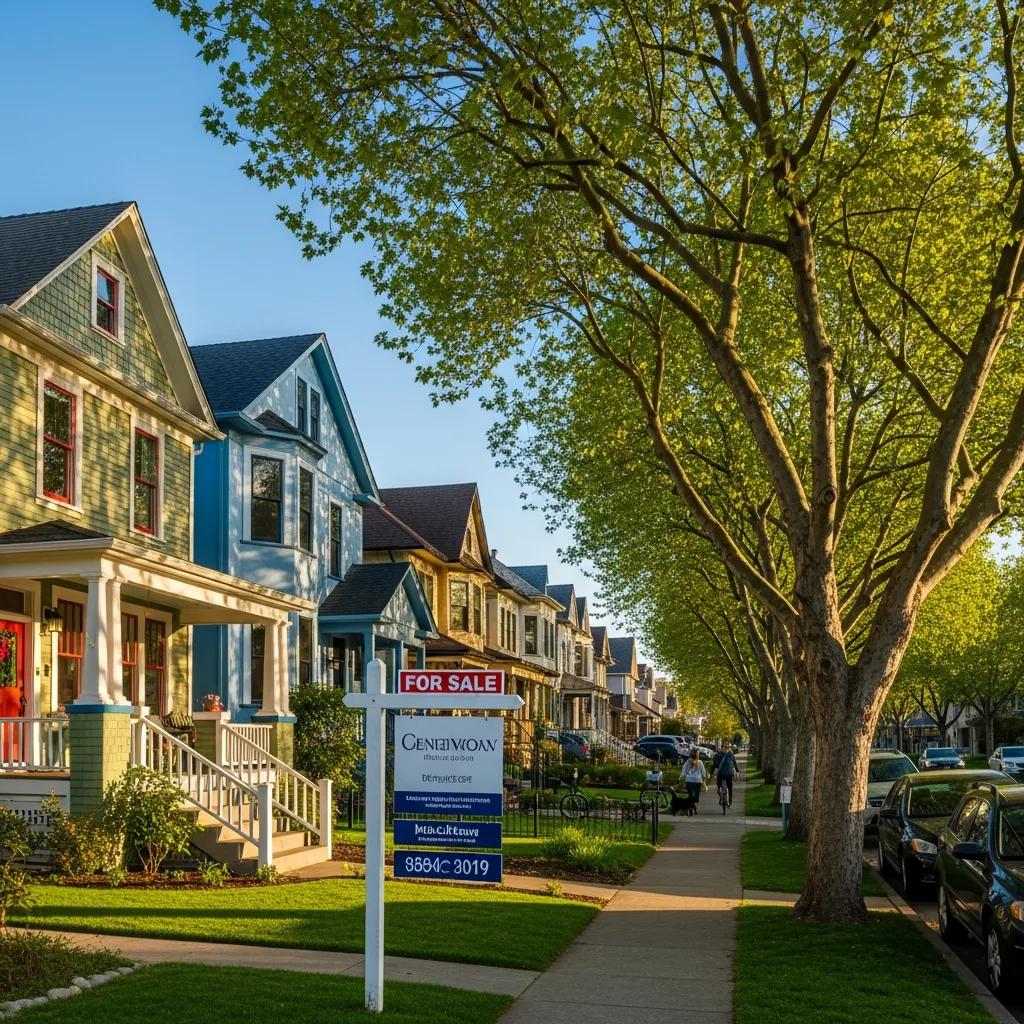
Local Sacramento factors that influence lender pricing include median home price changes, inventory levels, and days on market, all of which affect perceived borrower risk and lender appetite. When inventory is tight and prices climb, competition can push buyers to accept higher rates to secure offers, whereas soft markets give buyers leverage to negotiate rate buy-downs or seller concessions toward closing costs. Lenders also watch local employment trends and county-level affordability metrics, which are proxies for repayment risk and can alter pricing or overlays. For borrowers, monitoring these signals helps decide whether to prioritize a lower fixed rate or greater flexibility, and the following section compares 30-year and 15-year fixed choices in practical terms.
How Do 30-Year and 15-Year Fixed Mortgages Compare for Sacramento Homebuyers?
A 30-year fixed mortgage delivers lower monthly payments and greater cashflow flexibility, while a 15-year fixed mortgage increases monthly payments but reduces total interest and accelerates equity growth; both options offer rate stability that benefits Sacramento buyers planning multi-year residence. The comparison hinges on monthly affordability versus long-term cost savings: 30-year terms suit buyers needing breathing room in budgets, and 15-year terms reward borrowers who can afford higher payments and want quicker payoff. The table below presents quick side-by-side metrics to help Sacramento buyers evaluate which term aligns with income, home price, and long-term plans.
Loan Term | Monthly Payment Impact | Typical Borrower Profile |
|---|---|---|
30-Year Fixed | Lower monthly payment; higher lifetime interest | First-time buyers or those needing cashflow flexibility |
15-Year Fixed | Higher monthly payment; much lower lifetime interest | Homeowners prioritizing payoff and lower total interest |
Refinancing to Fixed | Can lock long-term predictability; costs depend on closing fees | Existing ARM holders or rate-sensitive owners |
This comparison clarifies trade-offs between immediate affordability and lifetime interest burden. The next subsections break down practical benefits for each term and provide numeric context.
What Are the Benefits of a 30-Year Fixed Mortgage in Sacramento?
A 30-year fixed mortgage benefits Sacramento buyers primarily through affordability: spreading principal over three decades lowers monthly payments and frees cash for savings, repairs, and local cost-of-living items. This structure also offers predictability for households planning to remain in their home long-term and for buyers working with variable income, since the fixed principal-and-interest payment will not change with market rates. Lower monthly obligations can improve qualification prospects by lowering front-end ratios, helping first-time buyers obtain financing in competitive neighborhoods. Given these points, many buyers favor the 30-year fixed when balancing monthly budget pressures with homeownership goals, and the following subsection explains why some borrowers opt for faster payoff with 15-year terms.
Why Choose a 15-Year Fixed Mortgage to Pay Off Your Loan Faster?
Borrowers choose a 15-year fixed mortgage because the shorter term typically carries a lower interest rate and substantially reduces total interest paid over the life of the loan, making homeownership dramatically less expensive long term. The faster amortization builds equity quicker, improving net worth and offering options like tapping home equity or selling with more profit earlier in ownership. The trade-off is a higher monthly payment that requires disciplined budgeting or higher household income, which suits buyers who prioritize debt reduction and are comfortable with tighter monthly cashflow. For Sacramento homeowners planning accelerated payoff or preparing for retirement, a 15-year fixed can be a strategic financial move, and the next section compares fixed and adjustable options for local buyers.
How Does a Fixed Rate Mortgage Compare to an Adjustable Rate Mortgage in Sacramento?
Fixed-rate mortgages provide long-term payment certainty and protection from rate increases, while adjustable-rate mortgages (ARMs) offer lower initial rates with the risk of future adjustments; the best choice depends on a borrower’s time horizon, risk tolerance, and the local market outlook. In Sacramento’s 2026 context—where rates can shift with national policy—fixed products reduce refinancing pressure for long-term owners, whereas ARMs may be sensible for buyers who expect to sell or refinance before adjustment periods begin. Evaluating these options requires weighing short-term savings against potential long-term volatility, and the next subsection lists pros and cons to make the trade-offs clear.
What Are the Pros and Cons of Fixed vs. Adjustable Rate Mortgages?
Fixed: Predictability: Fixed-rate loans guarantee stable principal-and-interest payments for the loan term, aiding long-term budgeting.
Fixed: Higher Initial Rate: Fixed products can start at a higher rate than ARMs but protect against future increases.
ARM: Lower Initial Cost: ARMs often offer a lower introductory rate, which can reduce short-term monthly payments.
ARM: Adjustment Risk: After the initial fixed period, ARMs can increase and raise monthly payments, creating potential payment shock.
Fixed: Best for Long Stays: Fixed loans suit buyers planning to stay beyond ARM initial terms.
ARM: Best for Short Horizons: ARMs can be sensible for buyers likely to sell or refinance before the first adjustment.
Which Mortgage Type Is Better for Sacramento First-Time Buyers?
For Sacramento first-time buyers, a conservative approach often favors a fixed-rate mortgage because it minimizes future payment uncertainty and aligns with limited credit buffers or tight budgets. First-time buyers frequently face affordability pressure, and a guaranteed payment helps with stable household planning while they build equity and financial resilience. However, if a buyer expects to relocate within the ARM initial fixed period or needs a lower introductory payment to enter the market, a carefully structured ARM can be viable—provided the borrower understands adjustment caps and has contingency plans. Local first-time assistance programs and lending overlays can change qualification dynamics, so buyers should compare products with an eye toward down payment assistance, PMI implications, and long-term affordability before deciding.
What Are the Qualification Requirements for Fixed-Rate Mortgages in Sacramento?
Qualification for fixed-rate mortgages in Sacramento depends on credit score, down payment, debt-to-income ratio (DTI), employment history, and documentation; lenders use these attributes to assess credit risk and set pricing or overlays. Typical credit score bands influence available pricing and loan programs, while down payment size affects loan-to-value and whether mortgage insurance is required. Lenders also evaluate DTI to ensure the borrower can sustainably manage housing payments and other debts. The table below summarizes common qualification attributes to help buyers quickly assess readiness and prepare for preapproval.
Introductory EAV-style table summarizing qualification attributes:
Attribute | Typical Requirement or Range | Notes for Sacramento Buyers |
|---|---|---|
Credit Score | 620–740 typical ranges | Higher scores secure better rates and fewer overlays |
Down Payment | 3%–20% depending on program | FHA allows lower down payments; conventional avoids PMI above 20% |
Debt-to-Income (DTI) | 36%–50% depending on lender | Lower DTI improves approval odds and rate offers |
What Credit Scores and Down Payments Are Needed?
Credit score expectations vary by program: conventional fixed-rate loans typically reward higher scores with lower rates, while FHA or VA fixed-rate programs accept lower scores or different compensating factors. Down payment needs follow program rules—some government-backed fixed products allow smaller down payments, while conventional loans often require larger down payments to avoid mortgage insurance. Mortgage insurance or private mortgage insurance (PMI) frequently applies when conventional down payments are under 20%, adding to monthly costs, so buyers should model PMI impact when comparing offers. Understanding how score bands and down payment size interact with APR and monthly payment helps buyers select the most cost-effective path.
What Documents Are Required for Fixed Rate Mortgage Applications?
To apply for a fixed-rate mortgage, prepare core documents such as two recent pay stubs, the last two years of W-2s or tax returns for self-employed borrowers, bank statements covering assets, government ID, and documentation of any additional income sources. Lenders will also request employment verification, gift-letter documentation for gifted down payments, and explanations for large deposits to satisfy asset traceability rules. Organizing these materials in advance reduces underwriting delays and helps speed preapproval; buyers should keep copies ready and ensure consistent employment histories to avoid manual underwriting triggers. The next section explains how to use mortgage calculators and where to find lender help locally.
How Can Sacramento Homebuyers Use Fixed Rate Mortgage Calculators and Find the Best Lenders?

Mortgage calculators are valuable tools to estimate monthly principal, interest, taxes, insurance, and PMI; using them helps Sacramento buyers test scenarios for rates, loan amounts, and down payments before engaging lenders. Calculator inputs typically include loan amount, interest rate, loan term, property tax estimate, homeowner’s insurance, and estimated HOA fees; outputs show monthly payment, total interest, and amortization schedules. Before contacting lenders, run sensitivity tests to see how small rate or down payment changes affect monthly obligations and lifetime interest.
How to Use a Fixed Rate Mortgage Calculator to Estimate Payments?
A mortgage calculator converts loan inputs—loan amount, interest rate, and term—into an amortization schedule that shows monthly principal-and-interest payments and cumulative interest paid over time. To estimate full monthly housing cost, add property tax, homeowner’s insurance, and PMI (if applicable) to the calculator’s principal-and-interest output. Sensitivity testing is critical: adjust the rate by 0.25%–0.50% and change the down payment to see how payments shift, which clarifies the value of rate buy-downs or larger down payments. Using these estimates helps buyers set an affordable budget and decide whether a 15-year or 30-year fixed term better matches their goals, and the next subsection outlines the lender-selection checklist and local lender categories.
Introductory checklist before choosing a lender:
Look beyond headline rate to compare APR and total closing costs.
Evaluate lender responsiveness and clarity during the preapproval process.
Consider local knowledge, multilingual support, and product range when selecting a lender.
Who Are the Best Fixed Rate Mortgage Lenders in Sacramento and What Are Their Unique Benefits?
When choosing a fixed-rate lender in Sacramento, compare local mortgage brokers, credit unions, and national banks because each category brings trade-offs in rate, fees, speed, and service; brokers can shop multiple investors for competitive rates, credit unions often reward members with favorable pricing, and national banks can offer streamlined underwriting. Anew Lending, a mortgage broker and lender based in Elk Grove, CA, operates in the Sacramento region and offers fixed-rate mortgage programs including 15- and 30-year options, refinancing, and other loan types; their reported strengths include competitive rates across loan programs, comprehensive support through the mortgage process, and multilingual assistance in English, Chinese, Spanish, and Vietnamese. Selecting a lender should balance rate competitiveness with service quality, local market knowledge, and the ability to explain rate locks and closing timelines.
Compare APR and fees: A lower rate may be offset by higher origination or third-party fees.
Ask about rate locks: Confirm lock length and costs to protect the quoted rate.
Evaluate language and local expertise: Multilingual support and local underwriting familiarity speed approvals.
Lender Type | Typical Strength | When to Choose |
|---|---|---|
Mortgage Broker | Shops multiple investors for best rate | When seeking competitive pricing and product flexibility |
Credit Union | Member-focused pricing and relationship benefits | For existing members with strong local ties |
National Bank | Streamlined processes and brand stability | When prioritizing digital convenience and predictable servicing |
Frequently Asked Questions
What is APR and how does it differ from a fixed mortgage's interest rate?
The interest rate on a fixed-rate mortgage is the annual cost charged on the loan’s principal balance, while the annual percentage rate (APR) reflects that rate plus additional financing costs such as origination charges and other closing fees, expressed as a yearly percentage. Because a lower headline interest rate can be offset by higher upfront fees, Sacramento buyers should compare APR alongside the quoted rate when evaluating lenders. Reviewing APR gives a fuller picture of the loan’s true cost, helping buyers avoid choosing an offer that looks cheaper monthly but costs more overall once fees are factored in.
Can Sacramento homeowners refinance into a fixed-rate mortgage, and when does it make sense?
Yes. Sacramento homeowners with an adjustable-rate mortgage or an existing fixed loan at a higher rate can refinance into a new fixed-rate mortgage to lock in long-term payment predictability, though the decision should weigh closing costs against potential savings. Early 2026 data shows 30-year fixed refinance rates running higher than purchase rates, reflecting refinancing activity tied to homeowner rate-seeking behavior. Refinancing tends to make the most sense for existing ARM holders facing an upcoming rate adjustment or rate-sensitive owners who can secure a meaningfully lower fixed rate, since closing fees need to be recouped through monthly savings over time.
What is a rate lock and how does it protect a fixed-rate mortgage borrower?
A rate lock is a lender commitment that secures a quoted fixed interest rate for a defined period, typically covering the time needed to complete underwriting and closing. Once locked at application or preapproval, the rate stays protected against market movement even if broader mortgage rates rise before closing. Sacramento buyers should confirm the lock’s length and any associated costs with their lender, since terms vary by lender and loan program. Securing a rate lock early in the process removes uncertainty during underwriting, letting buyers finalize budgets with confidence that their quoted payment won’t shift before closing.
Is private mortgage insurance (PMI) required with a fixed-rate mortgage in Sacramento?
PMI is typically required on a conventional fixed-rate mortgage in Sacramento when the down payment is less than 20% of the home’s purchase price, since it protects the lender against default risk on higher loan-to-value loans. This added monthly cost applies on top of the principal-and-interest payment, so it directly affects overall affordability. Government-backed fixed products like FHA loans carry their own mortgage insurance requirements regardless of down payment size. Buyers should model PMI’s impact using a mortgage calculator alongside taxes and insurance, since a larger down payment that avoids PMI can lower total monthly housing costs.
What's the difference between conventional, FHA, VA, and jumbo fixed-rate mortgages?
Conventional fixed-rate loans are the standard option for Sacramento borrowers with solid credit and typically require larger down payments to avoid PMI. FHA fixed-rate loans accept lower credit scores and smaller down payments, making them accessible to first-time or budget-conscious buyers. VA fixed-rate loans offer favorable terms to eligible veterans and service members. Jumbo fixed-rate loans apply when the loan amount exceeds conventional limits, suiting buyers purchasing higher-value Sacramento-area homes, and generally carry stricter credit and reserve requirements given the larger sums lenders are financing on these properties.
What factors determine the fixed mortgage rate a Sacramento lender offers?
Sacramento lenders price fixed-rate mortgages using a combination of national and local inputs, including Treasury yields, each lender’s cost of funds, and the borrower’s individual credit risk profile. Local housing conditions also factor in: median home price trends, inventory levels, and days on market all influence how competitive or cautious lenders are with pricing. When inventory is tight and demand is strong, lenders may hold firmer on rates, while softer local conditions can create room for negotiation. Borrowers with stronger credit scores and lower debt-to-income ratios typically receive more favorable rate offers within these market conditions.
Does a fixed-rate mortgage payment ever change during the loan term?
No, the principal-and-interest portion of a fixed-rate mortgage payment stays the same for the entire loan term, regardless of how national or Sacramento-area rates move afterward. This amount is locked in at closing through the amortization schedule and only changes if the homeowner refinances or makes extra principal payments. However, the total monthly housing payment can still shift over time if property taxes, homeowner’s insurance, or PMI premiums increase, since those items are often bundled into an escrow payment alongside principal and interest. The core rate and base payment themselves remain fixed throughout the term.
Conclusion
Choosing between a 30-year fixed mortgage, a 15-year fixed mortgage, and an adjustable-rate mortgage ultimately comes down to how a Sacramento buyer weighs monthly affordability, total interest cost, and long-term rate certainty. Fixed-rate loans anchor principal-and-interest payments through a locked amortization schedule, shielding buyers from the rate volatility, inventory shifts, and Federal Reserve-driven swings shaping the 2026 Sacramento market, while credit score, down payment, and debt-to-income ratio remain the deciding factors in qualification and pricing. Tools like mortgage calculators and rate locks give buyers the clarity to test scenarios and secure a quoted rate before closing, turning a complex decision into a manageable one. For Sacramento buyers ready to compare fixed-rate options against their specific budget and timeline, connecting with an experienced local lender like Anew Lending is a practical next step toward securing stable, predictable home financing.