


Home Loan Application Tips for Sacramento Residents: Your Complete Guide to Pre-Approval, Credit, and Loan Options
Getting a home loan in Sacramento requires local knowledge, organized documentation, and clear credit strategy to turn a house hunt into a closed escrow. This guide explains pre-approval, credit score thresholds, FHA requirements, required mortgage documents, first-time buyer navigation, and how to choose among common loan products in the Sacramento market. Sacramento-specific context matters: local limits and median prices influence whether a buyer needs conforming, jumbo, or specialty financing, and lenders evaluate debt-to-income and reserves against current market dynamics. Read on for step-by-step pre-approval instructions, credit improvement actions you can take before applying, a practical document checklist, and a clear comparison of FHA, VA, conventional, USDA, and jumbo options for Sacramento-area buyers. Each section includes actionable lists, machine-readable tables, and practical examples so you can prepare efficiently and approach lenders with confidence.
How Does the Sacramento Home Loan Pre-Approval Process Work?
Pre-approval is a formal lender review that verifies income, assets, credit, and debt to estimate how much a buyer can borrow and to issue a pre-approval letter. Lenders in Sacramento check credit reports, verify employment and income documents, analyze debt-to-income (DTI) ratios, and review bank statements to confirm reserves; the result is an estimate of loan amount, possible rate band, and conditions that could affect underwriting. A pre-approval is stronger than a pre-qualification because it is based on verified documentation rather than verbal estimates, which increases credibility with sellers and shortens escrow timelines. Understanding the mechanics of pre-approval helps buyers plan contingencies and choose homes within realistic price ranges in Sacramento’s market. The next subsection lays out concrete steps you can take to get pre-approved quickly and accurately so you can make competitive offers.
Anew Lending can assist Sacramento buyers through the pre-approval process with a dedicated coach who guides document collection, program selection, and timeline expectations. Their local expertise helps clarify program fit—such as FHA, VA, or conventional options—and their multi-lingual support can ease documentation questions, speeding lender review. Working with a broker-lender that acts as both originator and broker can provide access to multiple products and competitive rates while maintaining a single point of contact for the borrower. This supplemental support is designed to keep the borrower-focused guidance central to the application process and reduce common delays during underwriting. For many buyers, that hands-on assistance translates into stronger offers and smoother escrow.
What Are the Steps to Get Pre-Approved for a Home Loan in Sacramento?

Pre-approval follows a sequence of verification steps that most Sacramento lenders perform in a predictable timeline that typically takes 3–10 business days from submission to letter issuance. First, order and review your credit report to identify errors and resolve disputes early. Next, gather current pay stubs, W-2s (or two years’ tax returns for self-employed borrowers), recent bank statements, and government ID; organize them for upload to a lender portal. Then submit a loan application to a lender or broker who verifies employment, confirms assets, and runs credit; if documentation is complete, expect a pre-approval letter within days. Finally, keep finances stable after pre-approval—avoid new credit inquiries or large purchases—to preserve the approval while home shopping and negotiating offers.
- Check credit and resolve errors: Ensure no surprises appear on your credit report before applying.
- Collect pay stubs, W-2s, and bank statements: Lenders need recent documentation to verify income and assets.
- Submit application and documents: Upload to the lender portal and respond quickly to follow-up requests.
- Receive pre-approval letter: Use it when making offers to show the seller you’re a qualified buyer.
This stepwise approach reduces surprises during underwriting and improves your negotiating position in competitive Sacramento neighborhoods.
Why Is Pre-Approval Important for Sacramento Homebuyers?
Pre-approval matters in Sacramento because it demonstrates verified purchasing power, shortens contingency timelines, and strengthens offers in markets where sellers expect ready buyers. A pre-approved buyer often closes faster because documentation has been reviewed in advance, which can be decisive when multiple offers compete for a home. For example, a buyer with pre-approval may secure an offer acceptance when others without it cannot verify financing quickly; conversely, a buyer without pre-approval risks losing the property or facing appraisal/financing contingencies that complicate negotiations. Pre-approval also clarifies realistic price ranges and shows which loan products and down payment levels are feasible, helping buyers focus their search on homes that fit underwriting criteria. Understanding the practical advantages of pre-approval leads naturally into how credit scores shape those approvals and the rates you’ll be offered.
What Credit Score Is Needed for a Home Loan in Sacramento?
Credit score thresholds determine eligibility and pricing for common mortgage products in Sacramento: conventional loans typically prefer scores around 620 or higher, FHA can accept scores at 580 (with higher down payment exceptions for lower scores), and jumbo loans generally require higher scores and reserves. Lenders translate score bands into rate tiers; higher scores usually receive lower interest rates and better fee structures, while lower scores may require mortgage insurance or higher pricing. This relationship means improving your score even modestly before application can lower monthly payments materially. Below is a quick reference table that shows typical score ranges, loan types eligible, and how qualification or pricing is commonly affected in practice.
Different score ranges influence both available loan products and pricing:
| Credit Score Range | Loan Types Eligible | Typical Rate / Qualification Impact |
|---|---|---|
| 760+ | Conventional, VA, FHA, Jumbo | Best available rates; minimal pricing adjustments |
| 620–759 | Conventional, FHA, VA (case-by-case) | Standard rates for conventional; FHA available with MIP |
| 580–619 | FHA primary option | FHA available but may require higher MIP or down payment |
| <580 | Limited FHA with larger down payment | Higher pricing and stricter underwriting, lower approval odds |
Improving from one band to the next can reduce interest costs and expand program options, which directly affects monthly payments and affordability.
How Does Your Credit Score Affect Mortgage Rates and Approval?
Credit scores influence both the interest rate quoted and the lender’s assessment of default risk, which translates into specific rate and fee tiers for borrowers. Higher scores typically receive more favorable rate sheets, lower required reserves, and reduced mortgage insurance costs for conventional loans; for FHA loans, higher credit can sometimes lower the perceived risk even though MIP applies. Lenders also examine credit history details—such as payment history, utilization, and recent inquiries—which affect underwriting beyond the numeric score. For Sacramento borrowers, improving score-related factors ahead of application can convert a marginal pre-approval into a strong approval with better pricing. Understanding these mechanics highlights where focused credit actions produce the biggest benefit before applying.
- Payment history matters most: On-time payments are the primary driver of score improvements.
- Credit utilization is second: Lowering balances can quickly raise your score.
- Limit new inquiries: Avoid opening new accounts in the months before application.
This understanding feeds directly into practical steps Sacramento residents can take to raise their credit scores.
How Can Sacramento Residents Improve Their Credit Score for Home Loans?
Effective credit improvement focuses on targeted actions you can take 30–180 days before applying to move into a better score band. Start by pulling your credit reports, disputing inaccuracies promptly, and ensuring on-time payments for current accounts. Then prioritize paying down high-utilization revolving balances—reducing utilization under 30% often yields measurable score gains. Avoid opening new credit lines or making large purchases that increase balances, and address any collections or charge-offs with negotiated pay-for-delete where possible. For self-employed or nontraditional-income borrowers, maintaining clear documentation and consistent deposits reduces underwriter concerns even while you improve scores. These prioritized steps help Sacramento applicants present a cleaner credit profile during lender review and often shorten underwriting questions.
- Dispute errors on credit reports: Remove incorrect derogatory items that drag down scores.
- Pay down high-utilization accounts first: Lower utilization to improve your score quickly.
- Avoid new credit applications: Keep inquiries to a minimum during underwriting.
- Document income stability for self-employed borrowers: Clear bank deposits and tax returns reduce risk perception.
These practical moves create measurable improvements that enhance approval odds and rate offers.
What Are the FHA Loan Requirements for Sacramento Homebuyers?
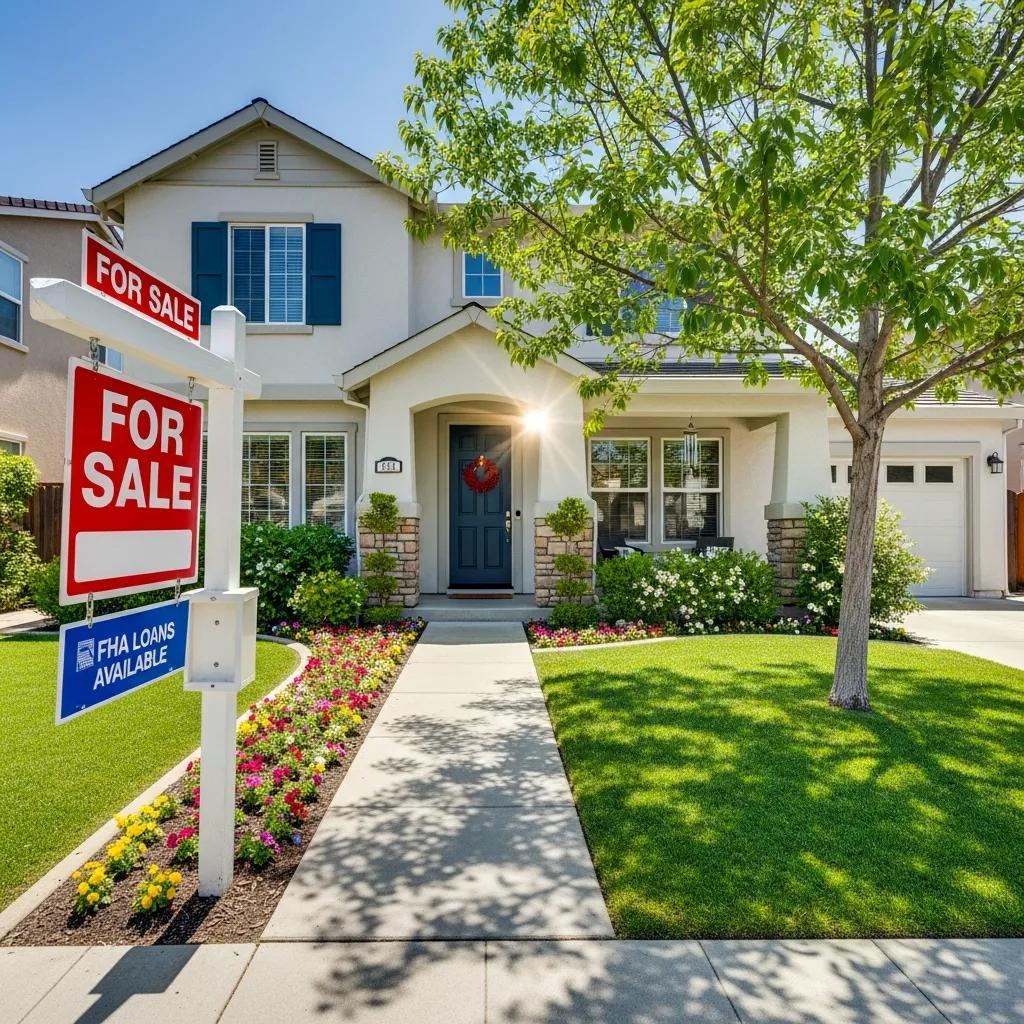
FHA loans offer accessible financing with lower down payment and relaxed credit thresholds, making them attractive to many Sacramento buyers who need flexibility. FHA requires mortgage insurance premiums (MIP) and has minimum credit and down payment guidelines—generally a minimum 580 credit score for the lowest down payment option, and 500–579 may be eligible with a larger down payment. Local FHA loan limits follow conforming parameters and vary by county; for Sacramento County the 2024 conforming limit for a 1-unit property is $726,200, which frames when buyers move into jumbo territory. FHA’s underwriting also considers documented income, acceptable residual debt levels, and property eligibility; for many first-time buyers and those with tighter down payment capacity, FHA remains a practical choice. The sections below clarify who typically qualifies and the specific local limit considerations that affect program suitability.
FHA loans particularly suit buyers who need lower upfront cash and can accept mortgage insurance as part of the long-term cost. Prospective borrowers must provide verifiable income, acceptable credit (often 580+ for a 3.5% down payment), and meet property standards for habitability. Because FHA requires both an upfront MIP and ongoing annual MIP, buyers should calculate total mortgage costs over several years to compare FHA to conventional options with private mortgage insurance (PMI). In Sacramento, where median home prices and local limits influence loan packaging, FHA can bridge affordability gaps for modest down payments while preserving reasonable monthly payments when rates are favorable. The next subsection highlights qualifications and everyday borrower benefits.
Who Qualifies for FHA Loans in Sacramento and What Are the Benefits?
Eligibility for FHA centers on documented income, acceptable credit, and a property that meets FHA appraisal standards; borrowers must typically verify stable employment history and provide necessary asset statements. The primary benefits include a low down payment option (as little as 3.5% for qualifying credit scores), more flexible credit underwriting compared with conventional loans, and utility for buyers with moderate credit blemishes. For many first-time buyers or those with limited savings, FHA lowers the cash barrier to entry, though mortgage insurance increases long-term cost. A simple example: on a $400,000 purchase, a 3.5% down payment reduces upfront cash needed versus a conventional 10–20% down scenario, enabling earlier market entry for qualified borrowers.
- Lower down payment: 3.5% for many borrowers meeting credit minimums.
- Flexible credit: More forgiving than conventional underwriting in many cases.
- Appraisal-based property requirements: Ensures habitability and lender protection.
What Are the Local FHA Loan Limits and Down Payment Options?
Local FHA and conforming limits determine whether a loan is treated as conforming or jumbo; for Sacramento County the 2024 conforming loan limit for a single-unit property is $726,200, so transactions above that threshold will generally require jumbo financing with different underwriting standards. Down payments interact with program choice: FHA’s 3.5% option applies to borrowers meeting credit thresholds, while conventional loans may require higher down payments or result in PMI if below 20%. When home prices push past conforming limits, buyers should expect stricter income, asset, and reserve requirements typical of jumbo underwriting. Understanding where local limits sit helps buyers plan down payment strategies and choose the product that balances monthly cost against upfront cash.
- Know the conforming limit: In Sacramento County, 2024 limit for 1-unit is $726,200.
- Compare down payment impact: Smaller down payments often mean mortgage insurance or different pricing.
- Plan for jumbo requirements: Loans above limits require higher credit, income, and reserve levels.
These points help buyers decide whether to aim for a lower-priced conforming purchase or prepare for jumbo underwriting.
What Are the Documents Are Needed for a Mortgage Application in Sacramento?
Lenders require a consistent set of documents to verify income, assets, identity, and property details; assembling these early prevents underwriting delays and helps produce a clean pre-approval. Essential categories include income verification (pay stubs, W-2s, tax returns), asset statements (bank statements, retirement accounts), debt documentation (credit card statements, loan statements), identity (government ID, social security number), and property documents once under contract (purchase agreement, HOA disclosures). Organizing these materials in advance and labeling digital files consistently speeds portal uploads and lender reviews. The table below organizes common documents, why lenders need them, and practical tips for preparing acceptable examples and redactions for privacy.
A clear mortgage document checklist speeds processing and reduces follow-up requests from underwriters:
| Document | Why It’s Needed | Typical Examples / Tips |
|---|---|---|
| Pay stubs | Verify current income | Last 30 days of pay stubs; highlight year-to-date earnings |
| W-2s / Tax returns | Verify historical income | Last 2 years W-2s; 2 years tax returns for self-employed |
| Bank statements | Verify assets and reserves | 2–3 months of statements; annotate large deposits with explanations |
| ID and SSN proof | Confirm identity and legal eligibility | Government-issued ID and social security information |
| Purchase agreement (once found) | Defines sales terms for underwriting | Fully executed contract including contingency dates |
Preparing these items in advance reduces common delays and supports a timely underwriting decision.
Anew Lending provides a downloadable mortgage checklist and document-organizing support to help Sacramento borrowers compile files properly. Download Anew Lending’s mortgage checklist or request personalized help by contacting via email or phone. Their assistance includes guidance on acceptable document formats, naming conventions for digital uploads, and clarification of information that underwriters commonly request. Using a checklist reduces back-and-forth during underwriting and often shortens time-to-closing, preserving offers and reducing stress for buyers.
What Is Included in the Sacramento Mortgage Application Checklist?
A well-structured checklist groups documents into Income, Assets, Liabilities, Identity, and Property so nothing is overlooked during lender review. Income documentation typically includes recent pay stubs, W-2s, and for self-employed borrowers two years of tax returns with profit-and-loss statements; lenders may also request 1099s or schedules. Asset verification covers bank statements that substantiate down payment funds and reserves, while liabilities require current statements for credit cards, auto loans, and student loans to calculate DTI. Identity documents and proof of residency complete the initial package; having certified copies or notarized documents ready where requested can expedite verification. Organizing the checklist into these groups reduces confusion for both borrower and loan officer and limits conditional items after application.
- Income: Pay stubs, W-2s, tax returns as applicable.
- Assets: Bank and retirement account statements showing funds for down payment.
- Liabilities: Statements for ongoing debts used in DTI calculation.
- Identity: Government ID and social security confirmation.
How to Organize and Prepare Your Documents for a Smooth Application?
Consistent file naming, single-portal uploads, and annotated supporting notes prevent common delays during underwriting and make it easier for loan officers to locate items. Use a naming convention such as LastName_Type_Date (for example, “Garcia_W2_2024”) and scan documents as searchable PDFs when possible. Prepare explanations for any large or unusual deposits and gather supporting records for nonstandard income such as rental or freelance earnings. Finally, keep originals accessible and avoid altering documents; if requested, provide certified copies or notarized statements to satisfy lender requirements. These organization habits speed lender review and reduce the need for repetitive follow-ups during underwriting.
- Use consistent file names and dates: Makes items easy to find for the loan team.
- Annotate large deposits: Provide source letters for explanations to avoid underwriting questions.
- Upload to a single portal: Centralizing documents reduces misfiled items and lost attachments.
- Keep originals accessible: Originals may be required at closing or for additional verification.
Clear preparation practices translate into a more predictable timeline from application to closing.
How Can First-Time Homebuyers in Sacramento Navigate the Loan Process?
First-time buyers should combine program selection, realistic budgeting, and staged timelines to move from pre-approval to closing without surprise costs. Local assistance programs, down payment aid, and state grants can alter affordability calculations, but eligibility varies by household income, purchase price, and program rules; lenders can pre-screen candidates to identify matches. Budgeting must include down payment targets, closing costs (typically 2–5% of purchase price), and reserves for immediate repairs or HOA fees. A phased timeline—pre-approval, home search within budget, offer with pre-approval letter, inspection and appraisal, and closing—helps buyers pace decisions and retain negotiating flexibility. The following subsection outlines common assistance program categories and how lenders can screen for eligibility to maximize first-time buyer benefits.
Successful navigation for first-time buyers depends on combining program screening with practical financial planning and coach-like guidance through the paperwork and deadlines.
What Special Tips and Assistance Programs Are Available for First-Time Buyers?
First-time buyers have access to several categories of assistance—down payment assistance, state or local grants, and deferred-payment loans—that can reduce upfront cash needs or provide subsidies tied to income and purchase price limits. Eligibility typically depends on household income, purchase location, and occupancy requirements; lenders and housing counselors can pre-screen for program fit and prioritize options that minimize long-term cost. Local programs often require participation in homebuyer education classes and enforce property price limits, while other programs offer second-mortgage assistance with favorable terms. Contacting a lender for an eligibility screen early in the process helps identify targeted programs and avoid last-minute surprises at contract stage.
- Down payment assistance: Helps cover part of the down payment or closing costs.
- Deferred loans: May postpone repayment until sale or refinance under qualifying conditions.
- Grants: Often income-limited and may require owner-occupancy conditions.
How to Budget and Plan Your Home Purchase in Sacramento?
Budgeting starts with a realistic estimate of purchase price, down payment, closing costs, and immediate reserves; tie these figures to Sacramento’s median prices to set achievable goals. Begin by calculating a target down payment (3–20% depending on program) and set aside closing cost estimates (2–5% of purchase price) plus an emergency reserve for post-closing repairs or unexpected fees. Use a timeline that allows for credit optimization (30–180 days if needed), accumulation of closing funds, and time for pre-approval before house-hunting. Track progress with a simple savings plan that segments funds for down payment, closing costs, and reserves to avoid dipping into each category prematurely.
- Estimate total upfront costs: Down payment plus closing costs and reserves.
- Set a savings timeline: Allow time for credit actions and account seasoning.
- Create separate accounts: Segregate down payment funds from everyday savings.
- Factor ongoing costs: Budget for mortgage, taxes, insurance, and HOA if applicable.
This structured budgeting approach keeps first-time buyers on track and reduces the risk of unexpected shortfalls during closing.
Which Home Loan Options Are Best for Sacramento Residents?
Choosing the best loan depends on borrower profile, property price relative to local limits, and long-term cost trade-offs; common options in Sacramento include FHA, VA, USDA (where eligible), conventional, adjustable-rate mortgages (ARMs), and jumbo loans for higher-priced transactions.
| Loan Type | Eligibility Criteria | Typical Benefits / Local Considerations |
|---|---|---|
| FHA | Minimum credit varies, verifiable income | Low down payment, mortgage insurance required; useful for lower cash buyers |
| VA | Eligible veterans/active-duty, VA entitlement | No down payment for eligible borrowers, funding fee considerations |
| Conventional | Higher credit, lower DTI preferred | Competitive rates and options for lower PMI with 20% down |
| Jumbo | Above conforming limit (e.g., > $726,200 in 2024 for 1-unit) | Higher credit/reserve requirements; needed for high-price Sacramento homes |
| USDA | Rural-eligible properties, income limits | No-down-payment option in qualifying rural areas; limited geographic availability |
| ARM | Varies by program | Lower initial rate for short-term ownership plans; consider rate risk over time |
This comparison clarifies trade-offs so borrowers can align product choice with credit profile, down payment ability, and intended ownership horizon.
How Do FHA, VA, Conventional, and Jumbo Loans Compare in Sacramento?
FHA offers lower down payments and more flexible credit terms but includes mortgage insurance that may raise long-term cost; VA provides no-down-payment options for eligible service members but has a funding fee that varies by circumstances. Conventional loans often yield lower long-term costs for borrowers who can provide higher down payments and have stronger credit, avoiding PMI at 20% down; jumbo loans step in when purchase prices exceed local conforming limits and require stronger credit, higher reserves, and often higher income documentation. In Sacramento, where price points vary by neighborhood, the choice often depends on whether the buyer needs to stay under the conforming limit or can meet jumbo requirements. Matching borrower circumstances to these program characteristics helps prevent misaligned expectations at underwriting.
- FHA: Good for lower down payment needs.
- VA: Best for eligible veterans seeking low upfront cash.
- Conventional: Cost-effective for higher-credit buyers.
- Jumbo: Required for higher-priced purchases above local limits.
What Are the Eligibility Criteria and Benefits of Each Loan Type?
Eligibility elements vary: FHA focuses on credit and documented income with specific MIP rules; VA requires military service eligibility and a valid certificate of eligibility; conventional loans emphasize credit score, DTI, and loan-to-value ratios; jumbo loans demand higher credit scores, lower DTI, and more reserves. Benefits align with eligibility: FHA’s low down payment, VA’s no-down-payment feature, conventional’s potential to avoid mortgage insurance, and jumbo’s ability to finance higher-priced homes. Underwriting differences—such as reserve requirements for jumbo loans or funding fees for VA—affect borrower cash needs and long-term affordability. Understanding these criteria allows Sacramento buyers to target the product that minimizes total cost while meeting purchase objectives and local lending realities.
- Document income and assets for all products: Lenders require verifiable records for underwriting.
- Match program to credit profile: Choose FHA for lower credit, conventional for higher credit.
- Plan reserves for jumbo loans: Expect additional months of reserves for high-balance financing.
These eligibility and benefit callouts help buyers prioritize which loan types to pursue during pre-approval.
Conclusion
Securing a home loan in Sacramento involves understanding local market nuances, preparing thorough documentation, improving credit strategically, and selecting the right loan product for your financial situation. Whether you are a first-time buyer or looking to upgrade, being well-informed about pre-approval, credit requirements, FHA limits, and loan options empowers you to make confident decisions and competitive offers.
For personalized guidance and expert support throughout your home loan journey, Anew Lending is here to help. Their dedicated team offers tailored coaching, document assistance, and access to a wide range of loan products designed to fit Sacramento buyers’ unique needs.